
Most sun damage isn’t from one big burn. It’s the slow buildup of years spent in the sun, at the beach, on drives with the window down, on days you meant to reapply and didn’t quite get to. Your skin remembers all of it.
Over time, that exposure shows up as sunspots, uneven tone, and a general loss of that smooth, even glow your skin used to have naturally. And here’s the part that can feel discouraging: serums and creams can only do so much, because this kind of damage settles in deeper than surface products can reach. That’s really the case for laser resurfacing. It works with your skin at the level where the damage actually lives, not just on what shows on top.
And Fine Lines?
Different cause, same honest truth. As we age, our skin naturally produces a little less of the collagen that keeps it firm and bouncy, and that process tends to start earlier than most people expect, sometime in our late twenties. Add in years of smiling, squinting, and everyday expression, plus skin that holds onto less moisture than it used to, and fine lines start to soften into view.
The good news is that fine lines sit close to the surface, which means they respond beautifully to treatments that encourage your skin to renew and refresh itself. That’s exactly what laser resurfacing is built to do.
What Actually Happens During Treatment
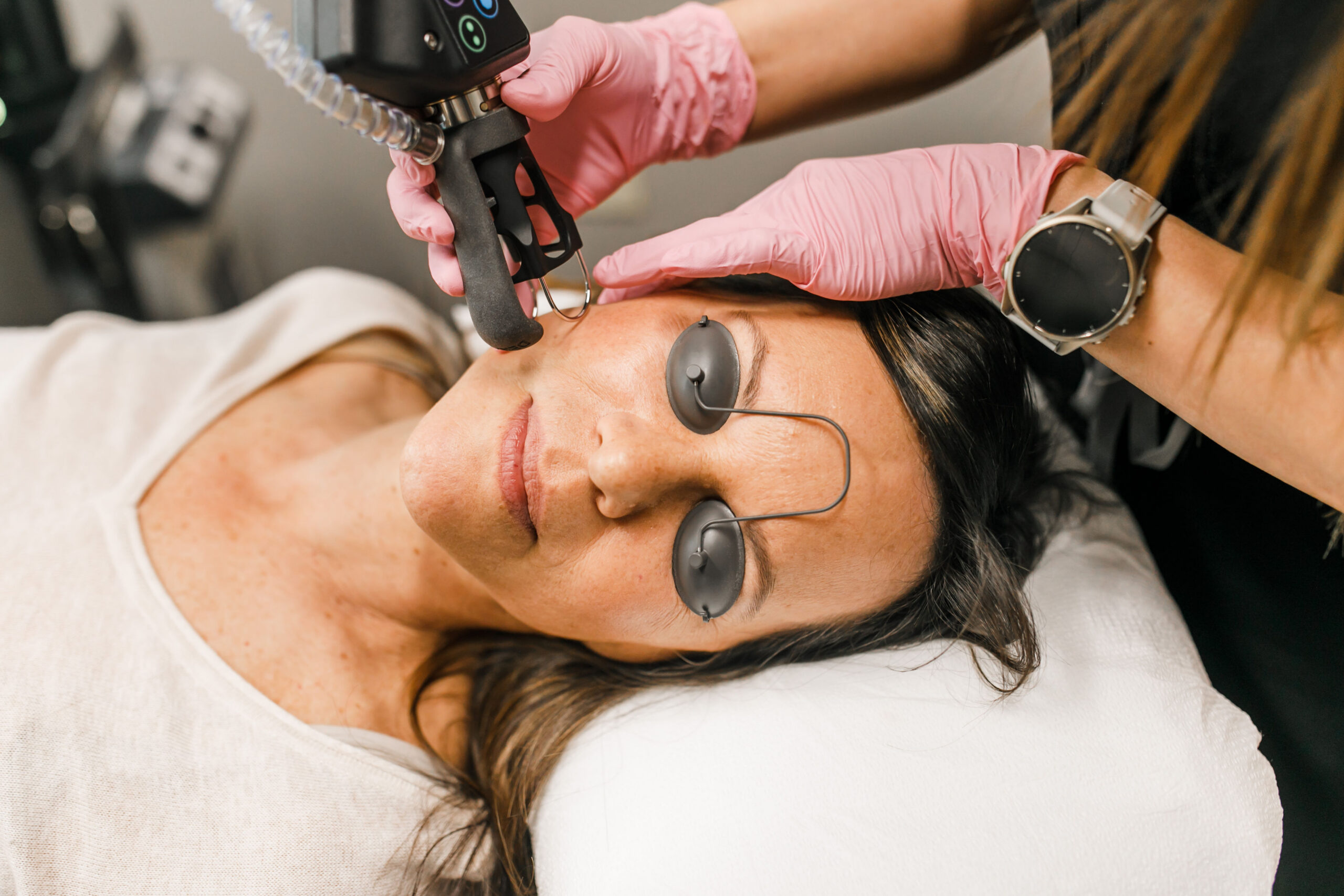
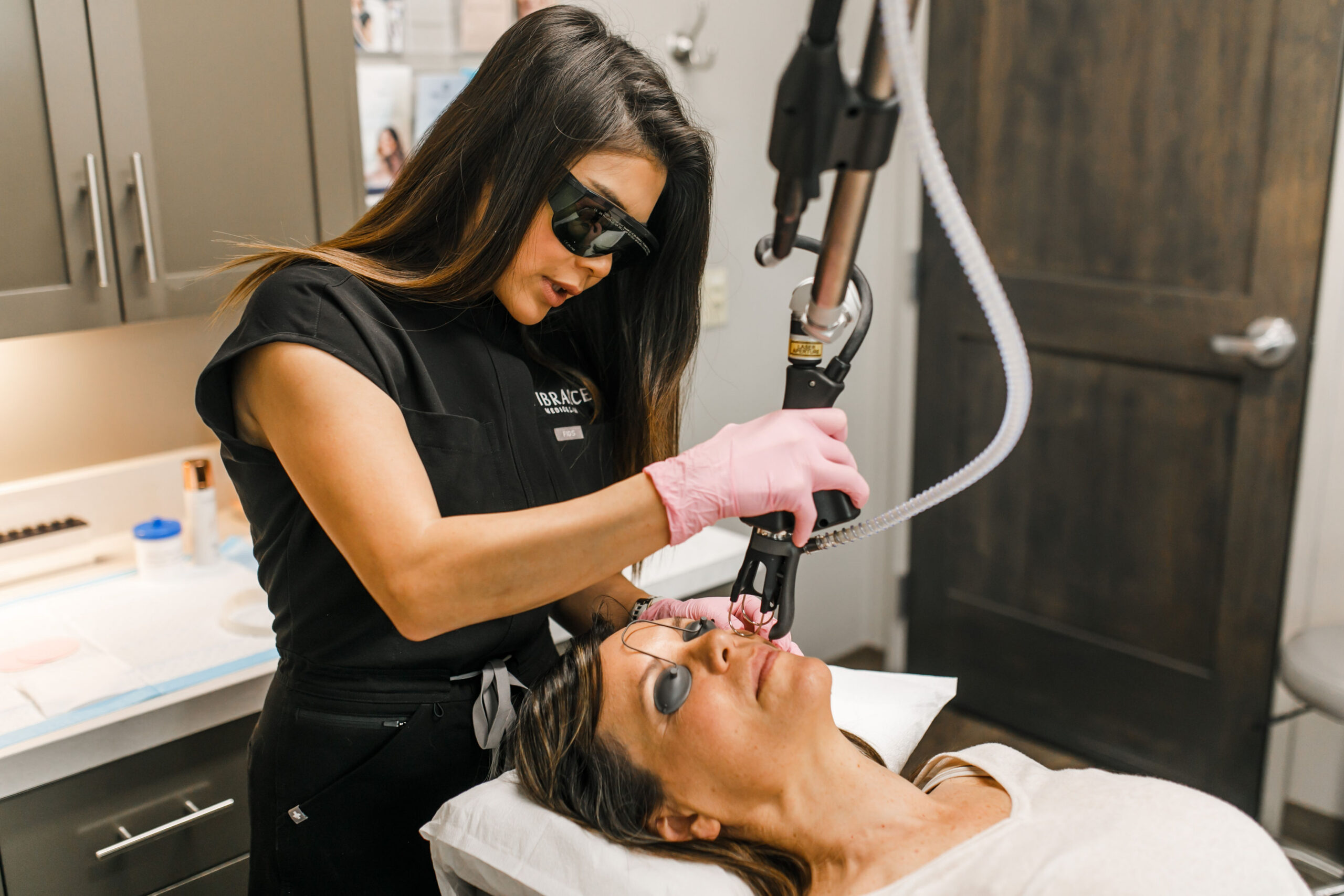
Laser resurfacing uses gentle, focused light to encourage your skin to let go of tired, damaged surface cells and make room for fresh ones underneath. As new skin forms, your body naturally increases collagen production, and that’s what leads to smoother texture and a more even, radiant tone over time.
There are a few different approaches, and which one is right for you really depends on your skin, your goals, and how much downtime feels realistic for your life right now. Some treatments are more intensive and deliver dramatic results with a longer recovery, closer to a week of visible healing. Others are gentler, designed to fit into a busier schedule with little to no downtime, often just a day or so of light pinkness.
This isn’t a one size fits all treatment, and it shouldn’t be. It’s something we love talking through together, because the right plan for your best friend might look completely different from the right plan for you.
What to Expect Afterward
Right after treatment, your skin may look a little flushed, similar to a mild sunburn, and that’s completely normal. Depending on the intensity of your treatment, you might notice some light peeling or flaking over the following few days as your skin sheds what it no longer needs.
In about two to four weeks, you’ll likely start noticing your skin looking brighter and smoother, with texture visibly improving.
Here’s what we always want our patients to know going in: Real results take a little patience. Your skin continues rebuilding collagen quietly beneath the surface for one to three months after treatment, so the glow you’re working toward keeps getting better well after the initial healing is done. If you’re two weeks out and thinking “is this it,” give it more time. It’s worth the wait.
Caring for Your Skin After Treatment
Since laser resurfacing works by encouraging your skin to heal and renew itself, how you care for it afterward makes a real difference in your results.
Keep your skin protected with SPF every single day, since it will be more sensitive to sun than usual for a while. Stick to gentle, soothing products while you heal, resist picking at any flaking skin even when it’s tempting, and give your skin a break from saunas, hot yoga, and heavy sweat sessions until you’re fully healed.
We will send you home with a personalized aftercare plan tailored to your treatment, so you always know exactly how to care for your skin along the way.
Is Laser Resurfacing Right for You?
Laser resurfacing tends to be a wonderful fit for anyone dealing with sun damage, fine lines, uneven texture, or early signs of aging who’s ready for a refresh. It’s generally not the right fit if you’re currently pregnant, dealing with active acne, or managing certain skin conditions, and we’ll always talk through your skin history with you first to make sure it’s the safest choice.
Honestly, the best way to know what’s right for you is to come sit down with us. We’ll take a look at your skin, hear what you’re hoping for, and help you find the treatment that feels most like you.